Message
Stress Responses in Life:
Evolution and Disease
How did life begin,
and how did it evolve?
This question is one of the deepest mysteries humanity has carried across the history of science. Since the birth of the Earth, fluctuations in oxygen and carbon dioxide have continually shaken the biosphere, manifesting as oxidative stress, hypoxia, and pH shifts. We believe it is precisely these challenges that have shaped life’s form, driving both its diversity and its evolution.
The rise of oxygen marked both the greatest crisis and the greatest opportunity for life. Oxygen was a toxin, generating harmful reactive oxygen species (ROS), yet it also offered a new source of powerful energy. By acquiring mitochondria, cells learned to harness oxygen efficiently, transforming a threat into a new metabolic strategy. In this, we see the ability of life to turn crisis into the engine of evolution.
Even today, organisms live under constant exposure to these “invisible stresses”—oxygen, ROS, and pH fluctuations. They can trigger aging and disease, yet at the same time serve as forces that shape development and evolutionary change. Stress, in other words, is both a threat to life and a key that opens the door to new possibilities.
To unravel this dual nature of stress, our laboratory develops technologies to visualize the “invisible stresses”, investigates the molecular mechanisms of stress sensing and response, and explores fundamental questions ranging from cancer biology to mammalian evolution to the chemical origins of life on Earth. Beyond these efforts lies a landscape of life science not yet drawn in textbooks. Here, by bridging chemistry and biology, we pursue research that redefines stress not as adversity but as opportunity. This is a place where the thrill of discovery is tangible—where you can witness, and take part in, the very moment new science is born.
Our laboratory belongs to Department of Synthetic and Biological Chemistry, Graduate School of Engineering, Kyoto University (Master’s and Doctoral Programs). We welcome visitors at any time—please feel free to contact Prof. Nobuaki Takahashi (takahashi@sbchem.kyoto-u.ac.jp) if you are interested.
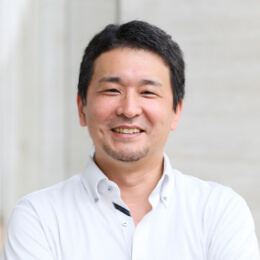
Professor Nobuaki Takahashi
Contact
(Incharge:Takahashi)